At the roots of Polynesia: the Odyssey of the first navigators
As early as 1500 BC, Polynesian navigators were already venturing out to sea, guided by the stars and currents. Setting out from regions such as Tonga and Samoa, they reached Tahiti, located in the South Pacific, aboard double pirogues laden with essential plants, including taro and coconut. These pirogues, veritable floating homes, still symbolize this adventurous spirit.
This daring voyage marked the beginning of a unique culture, which continues to be passed down through the songs, dances and stories of the tupuna, the Tahitian ancestors.
Mana and the Ari’i: the spirit of Tahiti
The island’s first inhabitants, perceived Tahiti as a sacred place imbued with mana, the spiritual energy that binds all living beings. The ari’i chiefs, invested in this power, maintained a privileged relationship with nature and the divinities. The marae, sacred temples such as the famous Taputapuātea on Raiatea, listed as a UNESCO World Heritage Site, were the gathering places for ceremonies to honor the gods.
Even today, these ancestral sites, often located on the edge of the coral reef, fascinate visitors, bearing witness to the deep-rooted spirituality of the Polynesian archipelago.
Otaheite, land of the gods
Before it became Tahiti, the island was called Otaheite, a term that evokes the musicality of the Tahitian language. Polynesian stories describe the island as a sacred land born of the union of two deities and imbued with mystical forces. This spiritual link with nature endures to this day, and the expression “Fenua o te Atua” – the land of the gods – still resonates with the island’s inhabitants, adding to the mysterious appeal of this paradise-like end of the world.
Tahiti’s history: European discovery

Discovered by the Spanish and Portuguese in the 16th and 17th centuries, Polynesia subsequently attracted the English and French in their quest for control over the archipelago. In 1767, British navigator Samuel Wallis spotted Tahiti and named it “King George’s Island”, but it was Louis-Antoine de Bougainville who popularized it in Europe a year later. Bougainville, amazed by the Tahitians’ welcome and the island’s beauty, nicknamed it “Nouvelle-Cythère”, in reference to the mythical island of the goddess Aphrodite.
This nickname inspired the philosophers of the Enlightenment, who saw Tahiti as an earthly paradise embodying harmony with nature and the myth of the “good savage”.
James Cook and science in Polynesia
In 1769, the famous Captain James Cook arrived in Tahiti to observe the transit of Venus, as part of a scientific expedition. The mission was also an opportunity to explore the Pacific. With the help of Tupaia, a Tahitian priest and chief, Cook discovered the neighboring islands. Tupaia drew an impressive map of the Polynesian islands, including the Marquesas and Australs, revealing to Europeans the extent of Polynesian maritime knowledge.
Colonization and cultural resilience in Tahiti
The arrival of Protestant missionaries in 1797, followed by French colonization, turned Tahiti upside down. They banned ancestral dances and rites, and influenced King Pomare II to adopt Christianity. In 1842, France imposed a protectorate, which became a colony in 1880 after King Pomare V ceded the kingdom. The island evolved with the development of infrastructure and an export economy (vanilla, copra, pearls).
Despite these changes, Tahitian culture persisted: the ‘Ori Tahiti, once forbidden, is now a national symbol. Tahiti became an overseas territory in 1946 and an overseas collectivity in 2004. Figures such as Pouvanaa a Oopa, a former Polynesian deputy, fought for Tahitian rights, paving the way for greater autonomy in the 20th century.
Paul Gauguin: an artist fascinated by Tahiti, land of muses

At the end of the 19th century, Paul Gauguin, an artist in search of inspiration, left France to settle in Tahiti. He was fascinated by the colors, landscapes and culture of Polynesia. Gauguin painted emblematic works inspired by Tahitian life, but he came up against the local reality, sometimes quite different from the exotic ideal he had imagined.
His paintings, such as “Femmes de Tahiti”, have left their mark on art history, although they often reflect a romanticized vision of the island. Tahiti inspired other artists and writers such as Loti and Jacques Brel, who captured the beauty and soul of Polynesia, contributing to its international renown.
Tahiti today: between modernity and tradition
The Polynesian art of living
Today, Tahiti is a popular destination, where modernity and tradition coexist. Papeete, the capital, offers a dynamic scene, with its markets, resorts and guesthouses. Polynesians live in symbiosis with nature. Fishing, surfing and, above all, va’a – the emblematic sport of dugout canoeing – embody this communion. Each activity pays tribute to the beauty and energy of the islands.
Tahitian experiences
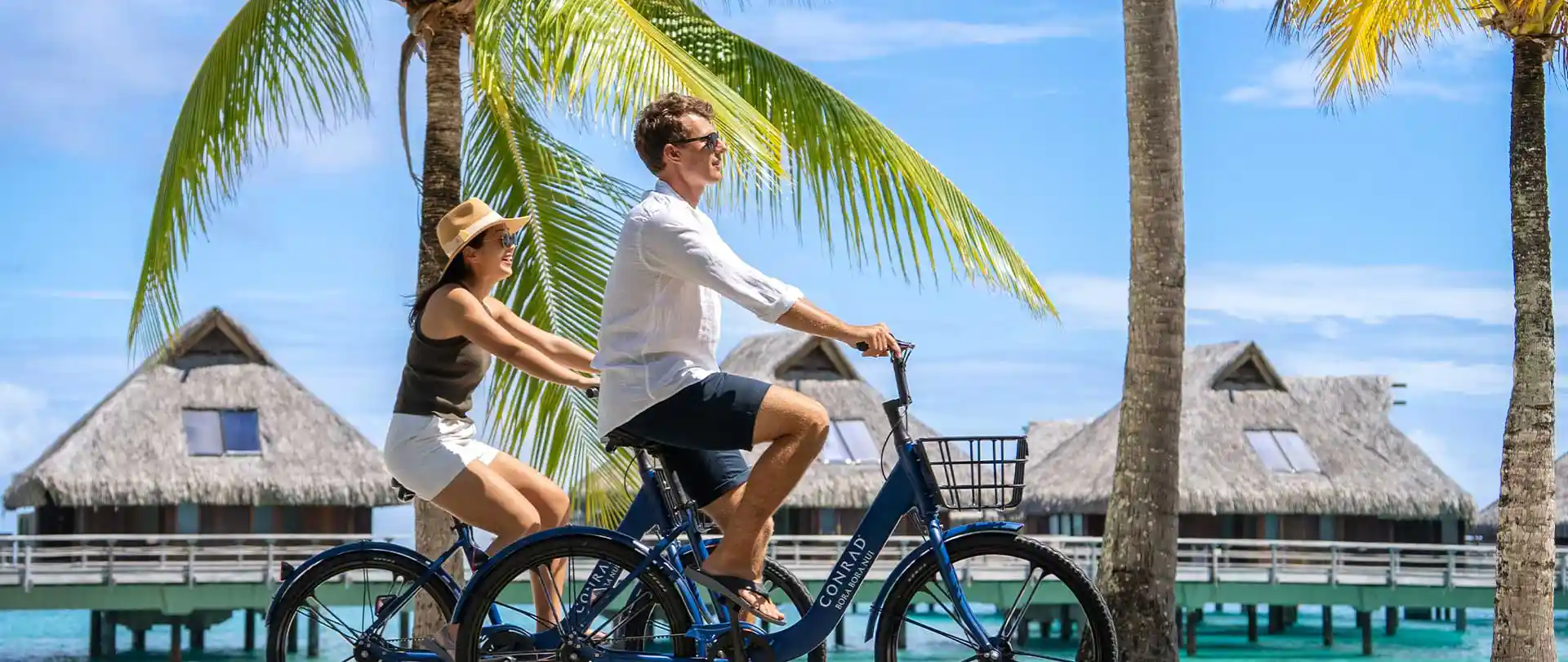
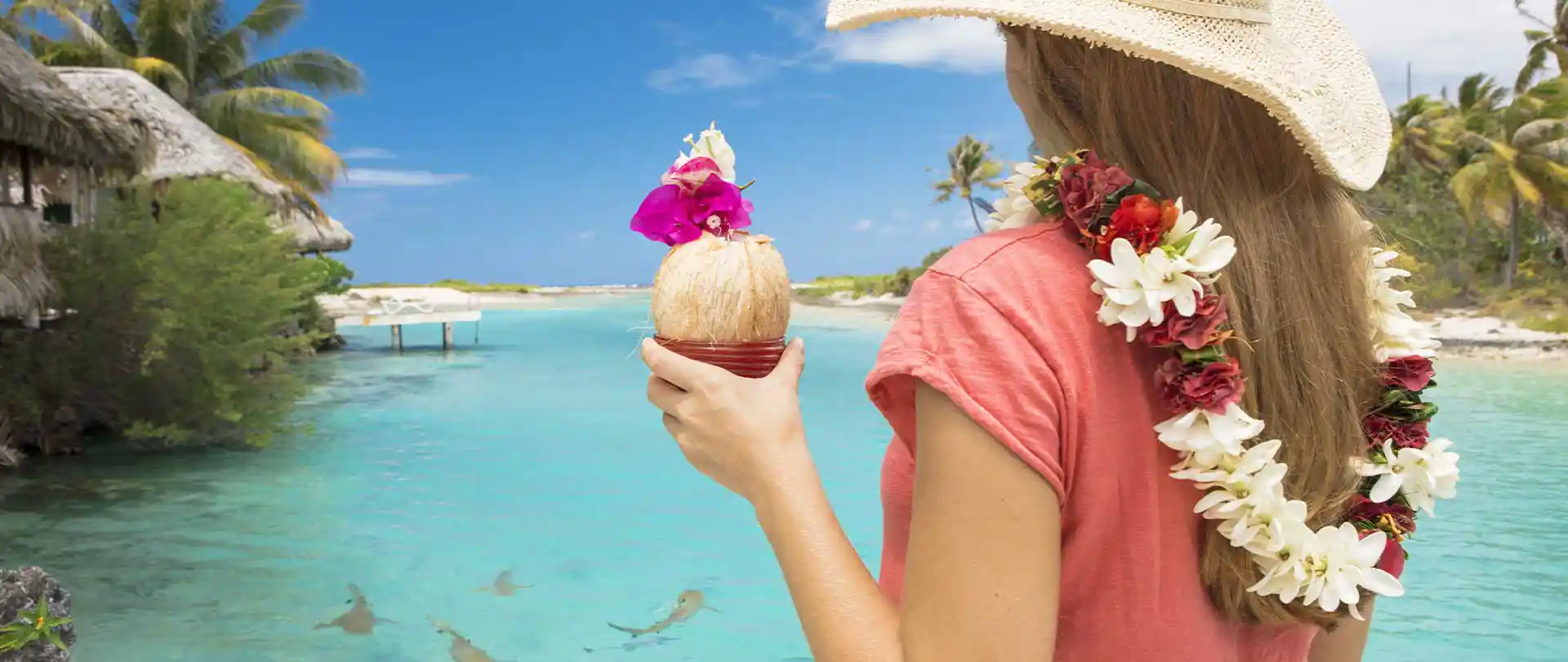
Catamaran excursions, cruises around the Leeward Islands and scuba diving in the coral reefs reveal the beauty of this tropical environment. Visitors discover white and black sand beaches, luxury hotels and bungalows on stilts.
The richness of the marine fauna, including dolphins and sharks, captivates every traveler. The black pearl, a symbol of luxury, and Tahitian tattoo motifs recall the island’s living cultural heritage.
Language and traditions, a living heritage
The Tahitian language is still spoken and taught, and traditional dances are a living heritage, celebrated every year at Heiva i Tahiti, a Polynesian song and dance festival. « ‘Ia Ora Na », « Maeva » et « Manava »: in Polynesia, these words of welcome reflect warm, spontaneous hospitality. This joy of living is also evident in the dances, polyphonic songs and rhythms of traditional music.
Monoi, coconut milk and local handicrafts perpetuate traditions and allow visitors to take away with them a little of the essence of Tahiti.
The Polynesian islands, particularly the Marquesas, have preserved their customs and sacred sites.
Discover Tahiti with Tahiti Travel Services

Tahiti Travel Services invites you to discover the island’s hidden wonders. From spotting the humpback whales that migrate through Polynesian waters every year, to hiking the verdant mountains of Tahiti Nui, to the black sand beaches of Punaauia, each excursion reveals a fragment of Polynesian history and culture.
The island of Moorea, the lagoons of Bora Bora, the atolls of the Tuamotus and the majestic mountains of the Marquesas are only a short distance away, each offering unique landscapes and experiences.
In conclusion
Tahiti is an open door to a thousand-year-old history, a rich heritage and a living culture. Tahiti Travel Services invites you to explore this exceptional heritage, where each visitor becomes a witness to a story that is told through coral reefs, traditional dances and the stories of ancestors. By discovering Tahiti, you are immediately immersed in a world where myths and reality intertwine to create an unforgettable memory.
✨FAQ on the history of Tahiti

What are the historical monuments to visit in Tahiti?
Among the must-see monuments, discover the Notre-Dame Cathedral of Papeete, the Museum of Tahiti and the Islands “Te Fare IaManaha”, Pointe Vénus, as well as the tomb of King Pomare V. Each site offers a unique insight into Tahitian history and culture.
Where is Pointe Vénus located and why is it famous?
Located north of Papeete, Pointe Vénus owes its name to the passage of James Cook, who came to observe the transit of Venus. It is a historic place surrounded by sublime landscapes.
What are the must-see natural places in Tahiti?
Explore remarkable natural sites such as the Papenoo Valley, Teahupo’o Beach, known for its impressive waves, and the Arahoho Blowhole, which surprises with its water-breathing effects.
Which local markets should you not miss?
The Papeete market is a must to discover crafts, buy souvenirs, pearls and taste local specialties, all in the heart of the capital.
Is it interesting to visit other islands from Tahiti?
Absolutely! Bora Bora, with its heavenly beaches and turquoise lagoons, is a Polynesian jewel. Other islands around Tahiti, such as Huahine, Rangiroa, Raiatea, also offer unique landscapes and experiences.